Vyrqelanox
Flux Library
Flux Library
Couldn't load pickup availability
1. Problem Statement
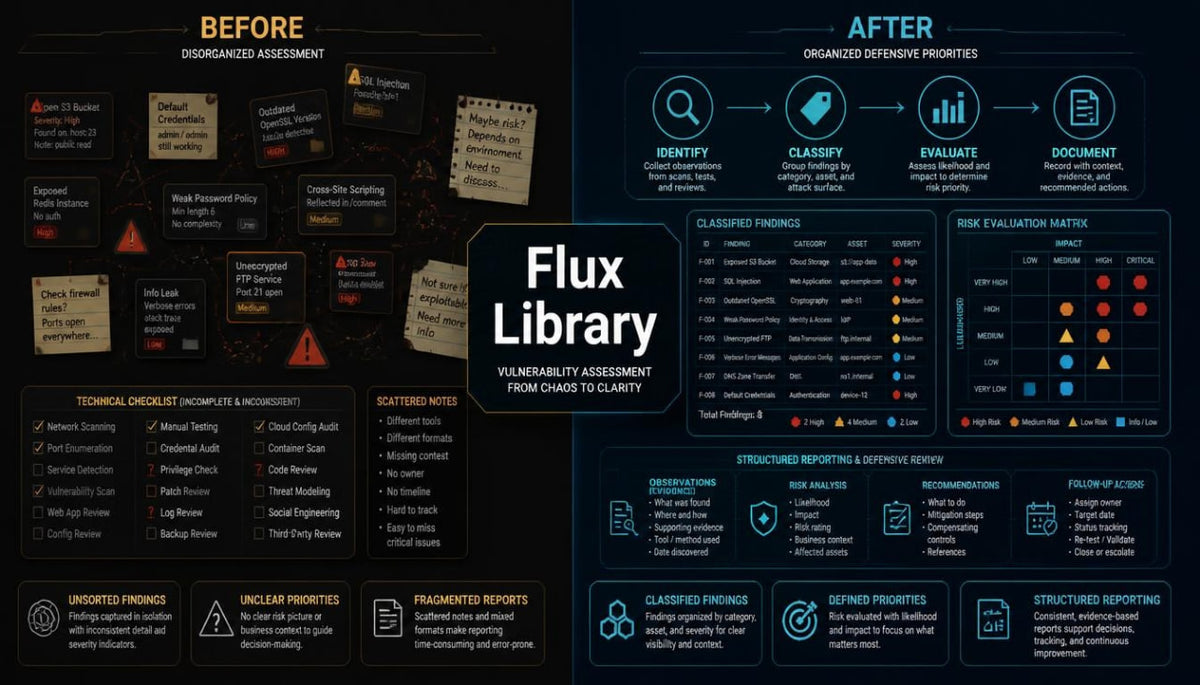
Digital environments continuously change as components, configurations, and operational requirements evolve. These changes can introduce weaknesses that are difficult to identify without systematic examination. Security observations may also vary in significance depending on affected information, exposure, and existing safeguards. Learners often encounter vulnerability reports without understanding how findings should be interpreted or compared. A structured assessment approach helps connect technical observations with informed defensive decisions.
2. Solution
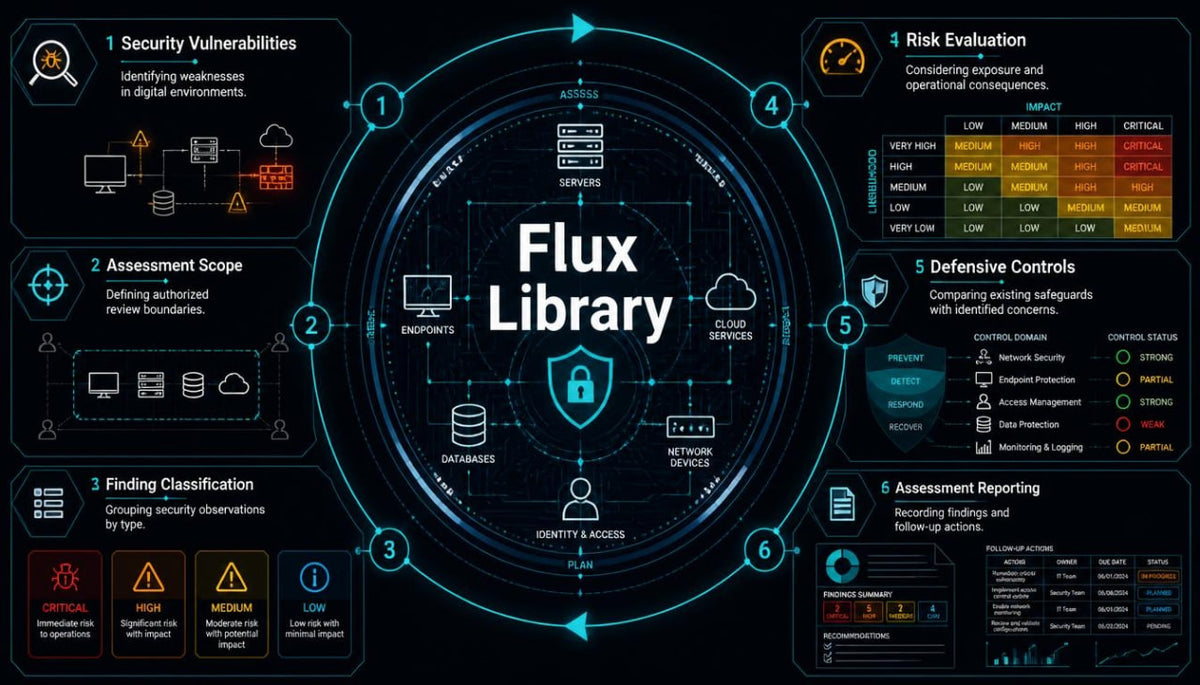
Flux Library introduces organized methods for examining vulnerabilities and evaluating cybersecurity concerns. Each module explains a particular assessment concept through practical illustrations and fictional environments. Guided activities demonstrate how to classify findings, consider possible consequences, and compare defensive priorities. Structured worksheets encourage careful documentation of observations, assumptions, and supporting evidence. The course connects vulnerability assessment principles with broader defensive planning and ongoing security review.
3. What's Inside
Module 1: Understanding Security Vulnerabilities
Explore the characteristics of security weaknesses and their relationship to threats, exposure, and protective controls. Examine configuration concerns, outdated components, unclear permissions, and insufficient information handling procedures.
Module 2: Foundations of Security Assessment
Study the purpose and structure of cybersecurity assessments. Topics include assessment scope, authorization, information collection, observation methods, and responsible documentation within controlled learning environments.
Module 3: Vulnerability Classification
Examine how security findings can be grouped according to their characteristics and possible consequences. Review fictional examples involving identity management, communication boundaries, information storage, and configuration practices.
Module 4: Risk Evaluation and Prioritization
Explore how likelihood, exposure, information sensitivity, and operational consequences influence security priorities. Complete guided exercises comparing fictional assessment findings using structured evaluation criteria.
Module 5: Examining Defensive Controls
Analyze the relationship between identified weaknesses and existing safeguards. Study how preventive, observational, and corrective controls contribute to cybersecurity planning.
Module 6: Assessment Documentation
Learn to prepare organized security findings containing descriptions, affected components, supporting observations, risk considerations, and suggested corrective actions.
Module 7: Security Review and Follow-Up
Examine how documented findings can be revisited after configuration changes or defensive adjustments. Explore review schedules, observation records, and the importance of tracking unresolved concerns.
Applied Assessment Workshop
Review a fictional connected environment, identify documented weaknesses, classify observations, evaluate priorities, and prepare a structured security assessment summary.
The course also includes terminology references, assessment worksheets, fictional case materials, and reflection questions.
4. Who Is This For?
Flux Library is intended for learners familiar with cybersecurity foundations who want to explore vulnerability assessment and defensive risk analysis. It suits students interested in security reviews, technical documentation, configuration evaluation, and organized defensive planning. Previous familiarity with security architecture and digital environments is recommended.
5. What You'll Learn
-
Identify common categories of cybersecurity weaknesses.
-
Explain the purpose of authorized security assessments.
-
Classify vulnerabilities using defined criteria.
-
Examine exposure and possible operational consequences.
-
Compare findings according to defensive priorities.
-
Evaluate the role of existing security safeguards.
-
Document assessment observations and supporting evidence.
-
Prepare structured vulnerability review summaries.
-
Organize follow-up activities after defensive adjustments.
6. Guarantee
We offer a 30-day money-back guarantee on all paid digital courses and educational materials available through our store.
If you are not satisfied with your purchase, you may request a full refund within 30 calendar days of the original purchase date.
As our courses are delivered digitally, there is no need to return any physical items. Receiving, downloading, or opening the course materials does not affect your eligibility for a refund under this policy.
Refunds will be issued to the original payment method. Processing times may vary depending on your bank or payment provider.
Our 30-day money-back guarantee is provided in addition to your rights under applicable consumer protection laws and does not limit those rights.
Self-paced learning overview
- 📥 Digital file available after purchase
- 📚 Long-term availability
- 🔒 Secure checkout
- 📅 Content updated in 2026
What format are the Vyrqelanox courses provided in?
What format are the Vyrqelanox courses provided in?
All courses are delivered as digital educational materials with organized sections, topic explanations, and practical learning activities. Each tier covers a different range of cybersecurity concepts, allowing learners to choose materials that match their interests and current knowledge.
Can I study the course materials at my own pace?
Can I study the course materials at my own pace?
Yes. Our courses are designed for independent study, allowing you to read, review, and revisit individual modules according to your personal schedule. You can organize your learning sessions around the topics you wish to examine in greater detail.
Do I need previous cybersecurity knowledge to begin?
Do I need previous cybersecurity knowledge to begin?
Previous technical knowledge is not required for our introductory materials. The course collection gradually introduces more detailed subjects, with each tier focusing on particular concepts, techniques, and practical applications. We recommend reviewing the course descriptions to understand the topics covered.
Share